
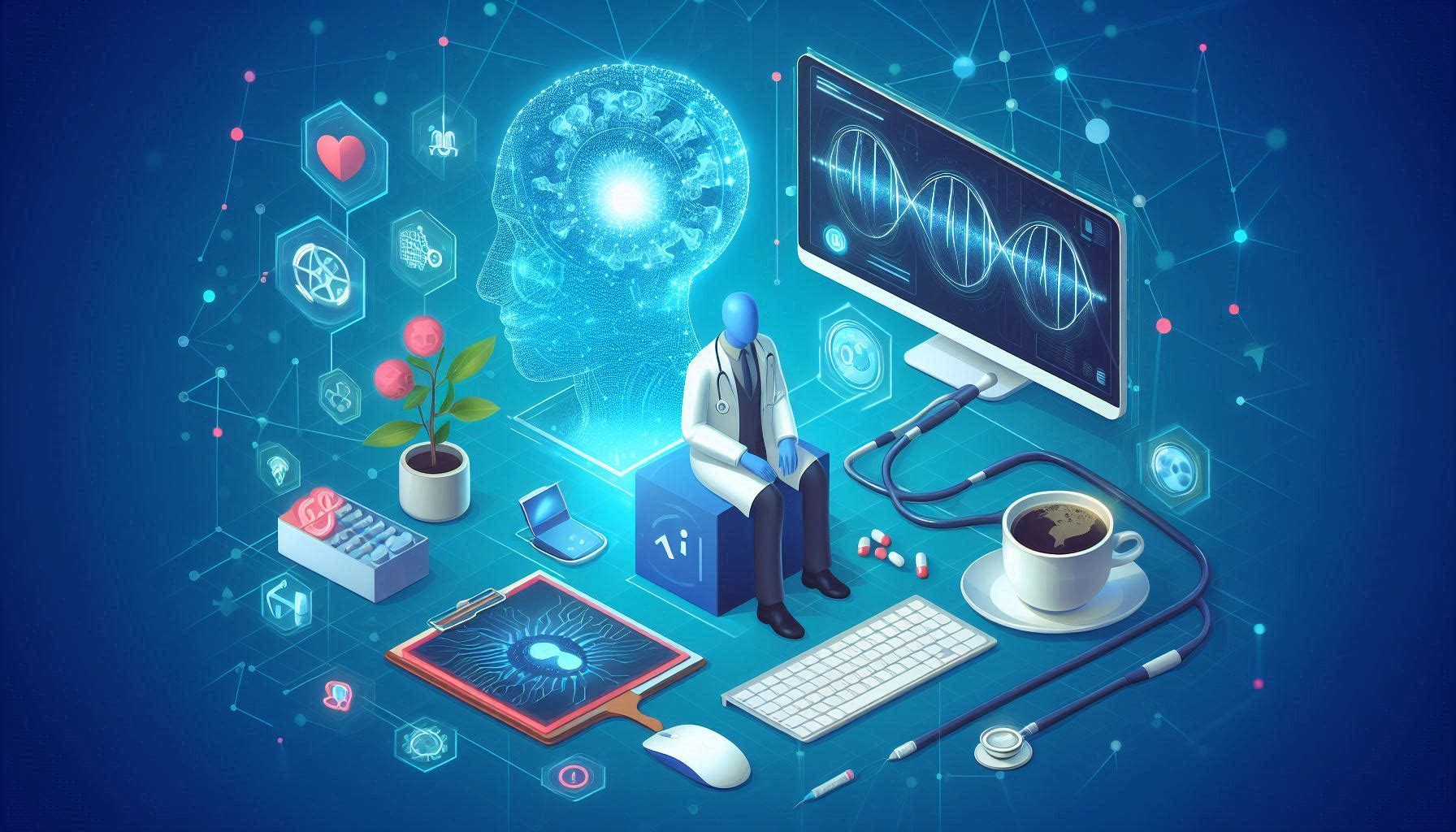
The healthcare industry stands at the precipice of a revolution. Artificial intelligence (AI), once relegated to the realm of science fiction, is rapidly transforming how we diagnose and treat disease
The healthcare industry stands at the precipice of a revolution. Artificial intelligence (AI), once relegated to the realm of science fiction, is rapidly transforming how we diagnose and treat diseases. From analyzing medical images with superhuman accuracy to tailoring treatment plans to individual patients, AI holds immense potential to improve patient outcomes, streamline healthcare processes, and ultimately, save lives.
One of the most promising applications of AI in healthcare lies in diagnostics. Traditional methods often rely on a physician's expertise and experience, leaving some room for human error. AI, on the other hand, can analyze vast amounts of medical data, including X-rays, MRIs, and CT scans, with unmatched speed and precision.
Early Disease Detection: AI-powered tools can detect subtle anomalies in medical images that might escape the human eye. For instance, companies like Zebra Medical Vision have developed AI algorithms that can identify early signs of lung cancer in chest X-rays with impressive accuracy. This allows for earlier intervention and potentially better clinical outcomes.
Improved Diagnostic Accuracy: Studies have shown that AI can achieve accuracy rates exceeding those of human radiologists in specific contexts. For example, a 2020 study published in Nature Medicine demonstrated that an AI system could outperform dermatologists in skin cancer classification. This can significantly reduce misdiagnosis rates and ensure patients receive the right treatment promptly.
Streamlined Workflows: AI can automate time-consuming tasks like image analysis, freeing up radiologists to focus on complex cases and patient interaction. Additionally, AI-powered decision support systems can analyze a patient's medical history, current symptoms, and risk factors to suggest potential diagnoses, aiding physicians in their decision-making process.
The impact of AI extends beyond diagnostics, playing a crucial role in developing personalized treatment plans and predicting patient outcomes.
Personalized Medicine: AI can analyze a patient's unique genetic makeup, medical history, and lifestyle to predict their response to specific treatments. This allows for the creation of personalized treatment plans, which are often more effective and have fewer side effects than traditional one-size-fits-all approaches. Companies like Paige are developing AI-powered platforms that analyze a patient's tumor profile to recommend the most effective therapies.
Drug Discovery and Development: The traditional drug discovery process is lengthy and expensive. AI can significantly accelerate this process by analyzing vast datasets of molecular structures and patient data to identify promising drug candidates with higher success rates in clinical trials. For example, BenevolentAI utilizes AI to analyze large datasets of scientific literature and patient data to discover new drug targets and treatment options.
Predictive Analytics: AI can analyze patient data to predict the risk of developing various diseases. This allows for early intervention with preventive measures or preventative medications, potentially improving patients' long-term health. Companies like Freenome focus on developing AI-powered tests that use a patient's blood to predict the risk of developing certain cancers.
The global AI in healthcare market is projected to experience significant growth in the coming years. According to a report by Grand View Research, the market size was valued at USD 8.6 billion in 2021 and is expected to reach USD 67.8 billion by 2030, reflecting a compound annual growth rate (CAGR) of 30.9%. This substantial growth is driven by factors such as increasing adoption of AI technologies in healthcare, rising healthcare costs, and the growing demand for personalized medicine.
Several companies are at the forefront of developing and deploying AI solutions within the healthcare sector. Here are a few examples:
These are just a few examples, and numerous other companies, both large and small, are actively involved in developing AI-powered healthcare solutions.
While the potential of AI in healthcare is undeniable, there are challenges that need to be addressed for its successful and ethical implementation.
The Road Ahead: A Future Powered by AI Despite these challenges, the potential benefits of AI in healthcare are vast. As AI technology continues to evolve and overcome these hurdles, we can expect to see even more groundbreaking advancements in disease diagnosis, treatment, and overall patient care. Here's a glimpse into the potential future:
The future of healthcare is undoubtedly entwined with the advancement of AI. By embracing this technology responsibly and ethically, we can usher in a new era of personalized, efficient, and ultimately life-saving healthcare for all.
AI holds immense promise for revolutionizing the way we diagnose and treat diseases. While challenges remain, continued advancements in AI technology and a collaborative effort from healthcare professionals, researchers, and policymakers can pave the way for a healthier future for all.
Filed under
Was this helpful?
Sahaj Singh is a Software Engineer at AnoCloud, specializing in building scalable cloud and AI-powered systems. With a strong foundation in modern software development, Sahaj contributes to the technical infrastructure that drives AnoCloud's products forward. His writing reflects a deep understanding of emerging technologies and their practical applications in the enterprise.
Expert strategy and implementation, tailored to your goals.